Introduction
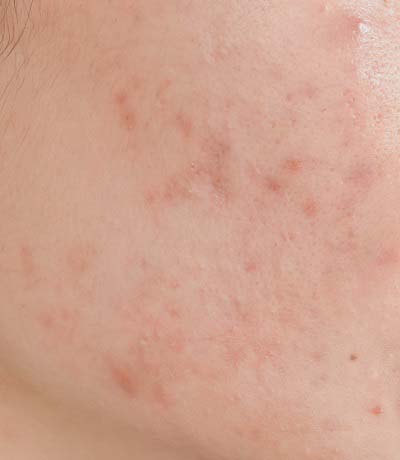
Acne is a common yet distressing condition that affects both males and females. It is a chronic skin disease of the oil follicle (sebaceous follicle) characterised by four main pathological changes—increased oil/sebum production, comedone formation, colonisation of the skin with Cutibacterium acnes (C. acnes) and resultant inflammation.
Many people suffer from acne in their youth and a smaller number in their adult years. This may result in permanent scarring which can have a significant impact on a person’s self-esteem.
Symptoms
Acne scars can be classified into several categories:
- Ice pick scars
- Boxcar scars
- Rolling scars
- Hypertrophic or keloid scars
- Atrophic scars
This may be complicated by discolouration or pigmentary changes:
- Post-inflammatory erythema: pink or purple flat patches
- Hypopigmentation: pale or white marks
- Post-inflammatory hyperpigmentation: brown patches, typically seen in people who tan easily or have a darker skin colour
Many people suffer from acne in their youth and a smaller number in their adult years. This may result in permanent scarring which can have a significant impact on a person’s self-esteem.
CAUSES
The cause of acne scarring is directly related to the presence of inflammatory/active acne, its duration, the extent of skin involved and the treatments used to manage the condition. One of the very common mistakes that we see often, is ‘picking’ and other self-directed treatment aimed at the inflammatory lesions of acne. This unfortunately often leads to scarring.
Male sex, a documented family history of acne, and the severity of the acne are recognised risk factors for the development of acne related scarring.
TREATMENT
As different categories of scars usually coexist in patients, combining several treatment modalities is usually required to improve scarring. It is important to firstly treat active/inflammatory acne to avoid further scarring. A number of techniques can be then be used to treat acne scarring and each technique may be more suited to a particular type of scarring.
1. Ice pick and box car scars
These deeper scars are often treated using surgical techniques, such as excision, subcision and punch grafting. They usually co-exist with other types of scarring and, therefore, additional treatment is usually necessary. The trichloracetic acid (TCA) CROSS technique is particularly effective for these types of scars.
3. HYPERTROPHIC OR KELOID SCARS
These scars can be treated with direct injection (intralesional injection) or laser assisted delivery of corticosteroid into the scars, combined with silicone gel type dressings and laser treatment.
Associated discolouration can be managed with vascular laser, picosecond laser and topical medication depending on the colour involved.
2. ROLLING SCARS
Rolling scars present with a more complex architecture and often require a combination of therapeutic approaches. Management typically includes procedural interventions such as subcision—a minor surgical technique designed to release the fibrous tethering beneath the skin. This is often followed by treatments aimed at restoring volume and improving skin contour.
OUR MEDICAL APPROACH
A clinical consultation is essential prior to initiating treatment. Acne scarring is best addressed through a combination of therapeutic approaches, and this consultation provides an opportunity to explore the full range of options tailored to your individual skin needs.
Do You Have A Question?
Please complete the form below and we will be in touch ASAP.
 Email us
 Call us